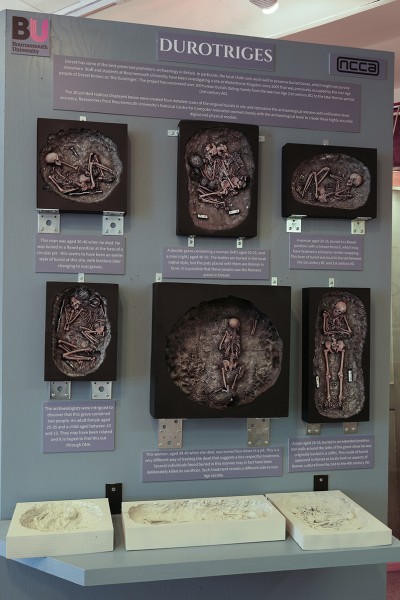
Visitors to Wareham Town Museum will now be able to experience prehistoric burials in a completely new form at an exhibition of 3D printed graves at a local iron-age site.
Being 3D printed also means that for the first time, blind and visually impaired people will be able to interact with this aspect of the past in a way that was not previously possible.
For over 15 years students and staff in Bournemouth University’s Archaeology and Anthropology department have been excavating Iron Age settlements in Winterbourne Kingston Dorset and have uncovered multiple burial sites. Unlike most Iron Age tribes in ancient Britain, the Durotriges in Dorset buried their dead. The chalky, alkaline soil is also ideal for preserving bones in the ground which makes the local area an important place for archaeologists to understand what life was like in in Britain before and after the Roman invasion.
At recent archaeological digs, the Bournemouth team have taken photogrammetry scans to create three-dimensional images of the graves they uncover. These virtual models have now been recreated as physical 3D printed versions by the University’s National Centre for Computer Animation and six of them have been mounted on display at the Wareham Museum in an exhibition that is the first of its kind.
A further three prints are located on a shelf below the display where they can be handled and examined by visually impaired people. Most of the models are roughly the size of A4 paper, some slightly bigger.
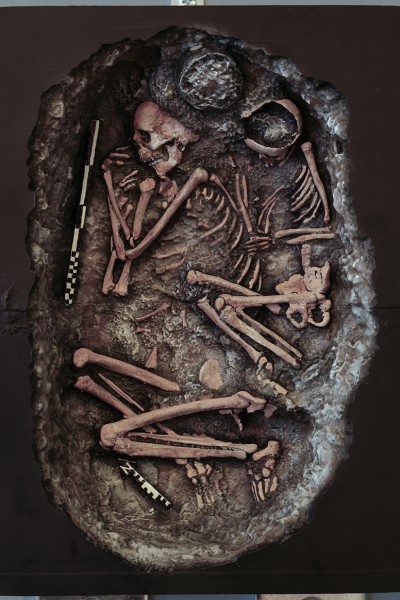
Dr Martin Smith, Associate Professor in Forensic and Biological Anthropology at Bournemouth University said, “One of the great ironies of archaeology is that when you excavate a site you effectively destroy it - whilst the objects or bones still exist, the arrangements only survive through the records we create. Traditionally this involved drawings and two-dimensional photographs
“By applying 3D printing methods to these virtual graves our Computer Animation colleagues have made an important part of our archaeological heritage far more accessible to both our local community and visitors. The models enable people to explore the site in greater detail, including those who may find traditional displays or digital images difficult to access."
Adam Redford, Principal Academic in Computer Animation at Bournemouth University said, “This project demonstrates how digital technology can not only recreate the past but also transform the way people experience it. By using advanced 3D modelling, we've been able to make these ancient graves physically engaging, opening up new ways for people to connect with history and showing how modern technology can help us share our heritage more widely."
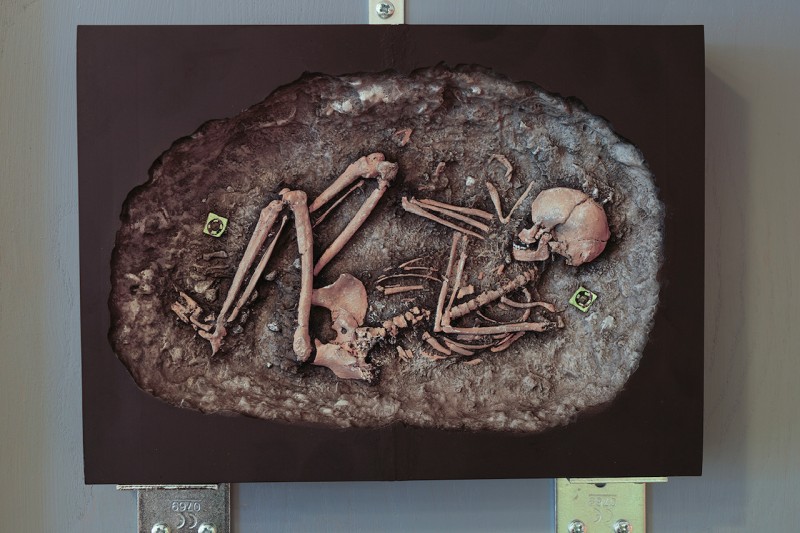
Kate Seal, Wareham Town Museum Co-Ordinator, said, “From my perspective, it's incredible that a small town-museum like ours can showcase such a pioneering exhibition. To be able to offer what we believe is the first display of its kind, and to make it freely accessible to everyone, is something we're immensely proud of.
“I also believe there's enormous value in museums working closely with universities and archaeological organisations. Having worked as a field archaeologist and studied archaeology myself, I've always been passionate about building those partnerships. They allow new research and discoveries to reach the wider public, ensuring that archaeology isn't confined to excavation reports or academic journals, but can inspire and engage people of all ages within their local communities.”
Darrell Bennett from Dorset Blind Association spoke to BBC Radio Solent about the exhibit. "It's brilliant the way that they've made it out of the resin, and you can actually feel the different depths of stuff. Youu can feel where the skeletons and the people actually are, and some of them have the grave goods still in there as well, like wine and food. It's just amazing to actually be able to feel the history and not just read about it," Darrell said.
The exhibition is now open to the public at the Wareham Town Museum.