Professor Zulfiqar Khan and his team at Bournemouth University have developed and patented a new remote sensor technology to prevent defects in major structures from escalating to costly and potentially dangerous levels.
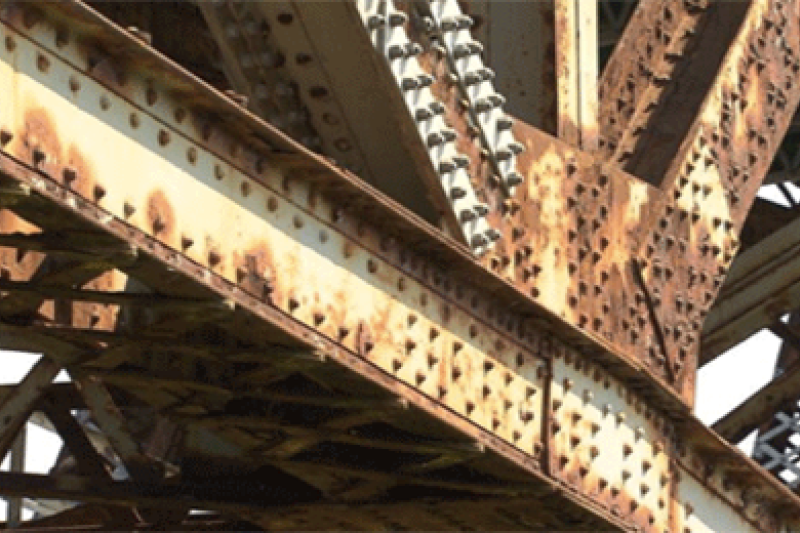
This advanced corrosion sensor enables early detection of structural weaknesses, cracks, or stress points on or just below the surface in infrastructure such as aircraft, ships, bridges, buildings, and oil pipelines.
By identifying issues at an early stage, maintenance teams can address problems before they become severe, reducing repair costs and preventing structural failures that could pose safety risks.
This innovation not only enhances the durability and safety of critical structures but also supports proactive maintenance strategies, ultimately extending the lifespan of infrastructure and ensuring public safety.
We are seeking partners to license and bring this patented technology to multiple business sectors.
Key benefits:
- The new remote corrosion sensor can identify defects in bridges, aircraft, major pipelines, and other large structures from any location.
- Traditional corrosion monitoring typically requires on-site inspections by workers, which is both time-consuming and expensive. This innovative device offers regular structural health assessments and can detect defects that are not visible to the naked eye.
- Compatible with all surface types, not just metal.
- By minimising the need for costly, prolonged, and disruptive closures, it enhances reliability and safety for the public.

Professor Zulfiqar Khan
Professor of Design, Engineering and Computing
If we can spot health risks in transportation or mechanical structures before corrosion reaches an advanced or even dangerous stage, we can avoid costly, lengthy repairs, and hopefully prevent structures from being scrapped altogether.
The cost of corrosion and structural failure
Modern society is dependent on vital transport and utilities infrastructure. Corrosion-induced structural failures in infrastructure assets impose significant economic burdens worldwide. The Association for Materials Protection and Performance (AMPP) estimates that the global cost of corrosion reaches approximately $2.5 trillion annually, equating to about 3.4% of the global GDP. (Tri-Council Development Fund, 2021)
Implementing effective corrosion control practices could yield substantial savings, avoid catastrophic disasters and loss of life.
Detecting defects and risks much earlier than current methods
The Remote Corrosion Sensor can detect defects and risks in major infrastructure at a much earlier stage than the methods that are currently used.
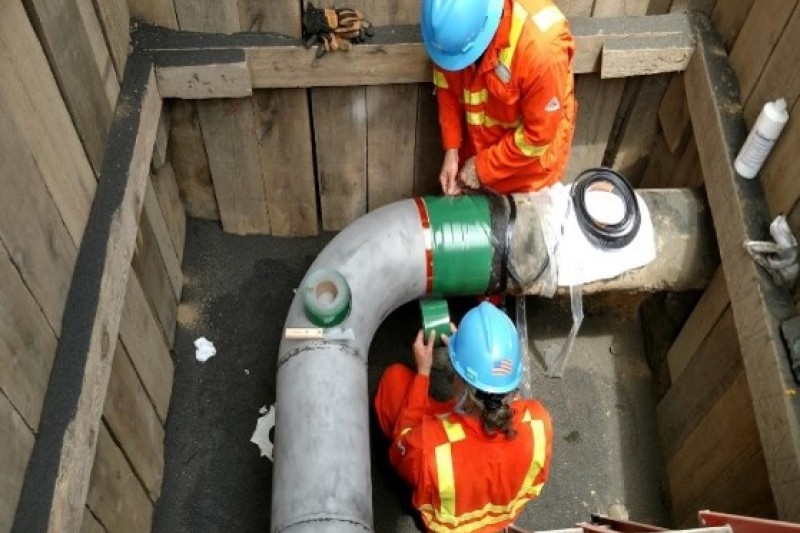
As well as improving safety, it can reduce the need for time-consuming repairs which can come at significant cost and inconvenience to industries and the public. Unlike current corrosion detectors, it works on both metallic and non-metallic surfaces and can identify defects several millimetres below the surface, which are not visible to the naked eye.
The device is wireless so it can be attached to a structure/component and readings can be continuously monitored off-site, which provides a continuous status check and negates the need for a person to be present to take readings.
An additional advantage is that the sensor is compatible with any type of surface, unlike most existing devices that function solely on metallic surfaces where the sensor's electrical current must pass through.
“Our doctors often encourage us to take health screenings regularly, so they can diagnose conditions at an early stage which gives us better options for treatment,” said Professor Khan, Professor of Design Engineering and Computing at Bournemouth University, who led the development.
“This sensor works on the same principle. If we can spot health risks in transportation or mechanical structures before corrosion reaches an advanced or even dangerous stage, we can avoid costly, lengthy repairs, and hopefully prevent structures from being scrapped altogether.”
Remote Corrosion Sensor in action
The Remote Corrosion Sensor is the latest innovation stemming from a series of research projects that began over a decade ago at the Bovington Tank Museum in Dorset, home to one of the world’s most significant collections of tanks and military vehicles. The research team utilised their expertise to develop a method for monitoring corrosion in these vehicles, aiding in the preservation of their cultural heritage.
This research ultimately contributed to the creation of a £2.5 million conservation centre dedicated to protecting the most vulnerable tanks. Additionally, the Bournemouth University team identified essential maintenance work on certain tanks, enabling them to be safely operated at showgrounds for the public to witness them in action.